
How the Sword & Shield Acts Could Stop the Marvin Nichols Reservoir
- Dewey R. Collier

- Feb 1
- 4 min read
Yes—and that is precisely why they matter.
For decades, the Marvin Nichols Reservoir has hovered over Northeast Texas like a permanent storm cloud. It is not funded. It is not permitted. It is not under construction. And yet, because it remains embedded in the Texas State Water Plan, it continues to pose a real and ongoing threat to rural landowners.
With the Marvin Nichols Reservoir still embedded in the Texas State Water Plan, the question is no longer theoretical: what, if anything, actually stops it?
What is the Marvin Nichols Reservoir?
The Marvin Nichols Reservoir is a proposed water project in the Texas State Water Plan that would permanently flood large portions of Northeast Texas to supply water to the Dallas–Fort Worth metroplex, relying on eminent domain and inter-basin water transfers.
This is exactly the kind of project the Sword & Shield Acts are designed to confront.
A Project That Cannot Exist Without Eminent Domain Coercion
The Marvin Nichols Reservoir cannot move forward without the use of state power. Specifically:
Eminent domain to take tens of thousands of acres of private land,
State permits and regulatory approvals,
Public financing or bonding authority,
Inter-basin water transfer approvals that exist only by statute.
Once public power is invoked to compel, transfer, or extinguish private property rights, the Constitution is triggered. At that point, this is no longer a “planning concept” or a “future option.” It is state action, and state action must rest on actual constitutional authority, not convenience or regional preference.
The Sword & Shield Acts enforce that rule.
Planning Bodies Are Not a Substitute for the Constitution
One of the core principles of the Acts is non-delegability of constitutional duties.
Water planning groups, river authorities, and quasi-governmental entities do not possess independent sovereignty. They cannot manufacture authority simply by keeping a project alive in a plan, repeating it across planning cycles, or labeling it “regionally necessary.”
Planning entities face no electoral accountability, bear no financial risk, and suffer no personal consequence if a project destroys communities that never consented to it.
Under the Sword & Shield framework:
Planning inertia does not equal constitutional authority.
Agencies cannot contract around takings protections.
Eminent domain powers cannot be expanded by recommendation, modeling, or silence.
If an oath-bound official relies on planning documents instead of actual constitutional and statutory authorization, that reliance itself becomes an ultra vires act—void from the beginning.
Standing Before the Bulldozers Arrive
Historically, landowners are told they must wait until condemnation proceedings begin before they can challenge a project. By then, the damage is already done.
For families whose land has been mapped, priced, and penciled into future plans, the harm is not abstract—it is lived daily.
The Sword & Shield Acts correct that imbalance.
They recognize structural injury as a basis for standing. When a project like Marvin Nichols is continuously embedded in the State Water Plan—with mapped footprints, designated acreage, and identified beneficiaries—it creates present harm:
Clouded title,
Depressed land values,
Regulatory targeting,
A perpetual eminent-domain threat hanging over families and ranches.
That injury is not hypothetical. It is real, ongoing, and actionable.
“Public Benefit” Is Not a Constitutional Blank Check
Supporters of large reservoir projects often fall back on a familiar phrase: public benefit. But the Constitution does not allow property rights to be overridden by slogans.
Water supply for metropolitan growth is a policy choice, not a constitutional trump card. The Texas Constitution protects private property first, not last. When a project permanently destroys rural land primarily to serve external urban expansion, it demands the highest level of constitutional scrutiny.
The Sword & Shield Acts make clear that labeling coercion as “public benefit” does not insulate it from review.
Why the Marvin Nichols Reservoir Still Matters Now
Marvin Nichols may be “decades away,” but that is precisely how projects like this survive—by never dying, never being resolved, and never being removed from planning documents, until it's too late.
As long as it remains in the State Water Plan, landowners remain exposed.
If the Sword & Shield Acts were law:
Marvin Nichols could not quietly advance through planning bodies.
Eminent-domain exposure could be challenged immediately.
Officials could not hide behind “it’s just in the plan.”
Any ultra vires action would be void, not merely contestable years later.
In plain terms, the Acts return leverage to the People—where the Constitution put it in the first place.
Accountability Means Results—Not Reassurances
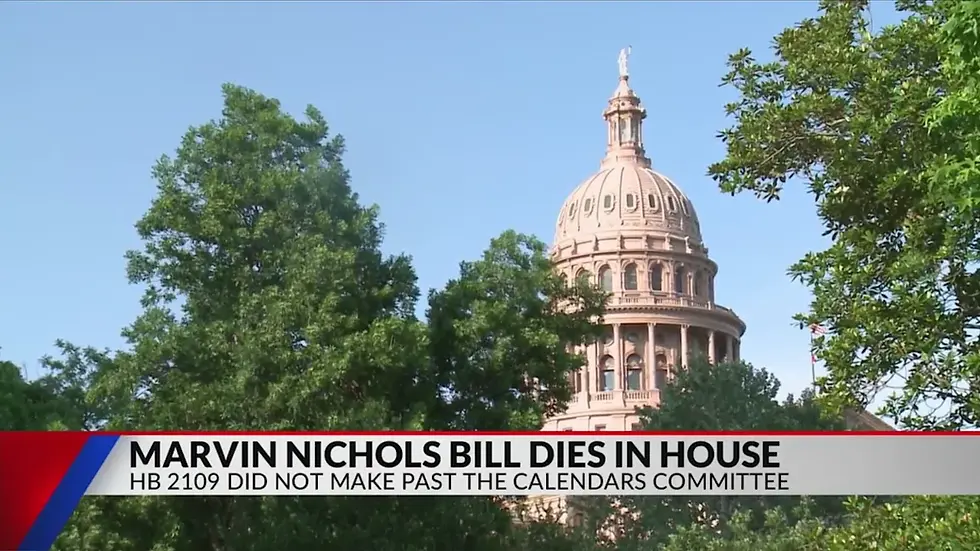
The Marvin Nichols Reservoir did not survive by accident. It survived because the incumbents allowed it to survive.
Year after year, election after election, the same officials promise to “watch it,” “monitor it,” or “push back if necessary.” Yet the project remains embedded in the State Water Plan, and landowners remain exposed.
Constitutional government does not run on good intentions. It runs on enforcement, limits, and consequences.
If we continue to elect representatives who refuse to draw firm constitutional lines, we should not be surprised when the same threats return in every planning cycle. Accountability begins when voters decide that reassurance is no longer enough—and that results are not optional.
The Bigger Principle
The Marvin Nichols Reservoir truly survives not because it is inevitable, but because no one has been forced to stop it. The Sword & Shield Acts change that equation by restoring constitutional friction—where power must justify itself before it destroys what it cannot replace.
This is not just about one reservoir.
It is about whether rural Texans exist to be managed for urban convenience, or whether constitutional limits still mean what they say.
The Sword & Shield Acts draw that line clearly:
Public power belongs to the People. It cannot be quietly repurposed against them.

Comments